
My Experience Writing My First Book
The Graveyard of Unwritten Ideas
Many times throughout my life I thought, “I should write a book about that.”
The excitement would hit like a shot of espresso. Ideas would swirl. Possibilities would multiply. And then, predictably, the pattern would repeat itself.
Self-doubt would creep in. Would anyone actually want to read this? Would I do it justice? How would I ever find the time? Where would I even start?
Time after time, my ideas followed the same fate: a few scribbled notes in a notebook, eventually forgotten and tucked into a drawer. Out of sight. Out of mind. Another creative spark extinguished before it ever had a chance to catch fire.
When Everything Changed
In July 2025, something shifted.
Instead of approaching my book as a lonely endeavor—me versus the blank page—I was having coffee with Kae Wagner. I knew she was a bestselling author in both fiction and nonfiction. I respected her craft. But what I didn’t expect was the quiet power of her encouragement.
She urged me to share my story. Not because it was unique, but precisely because it wasn’t. She felt it would resonate with executives everywhere. That it could help people avoid the painful crash I had suffered. That my experience, as raw and humbling as it was, could actually serve others.
Here’s the thing about having trust and encouragement from a subject-matter expert: it quiets even the most energetic “monkey mind.” Right away I recognized that familiar feeling—the one where you know you’re in good hands. Where you can simply trust the process.
It didn’t make writing easy, mind you.
But it made it possible.
Trusting the Process (Even When It’s Hard)
I trusted Kae and embarked on a journey I never anticipated. I learned about the publishing world—its rhythms, its surprises, its endless layers of complexity. I discovered the uniqueness of the business fable genre: how it blends the power of storytelling to establish an emotional connection with readers while also delivering a structured framework they can actually use.
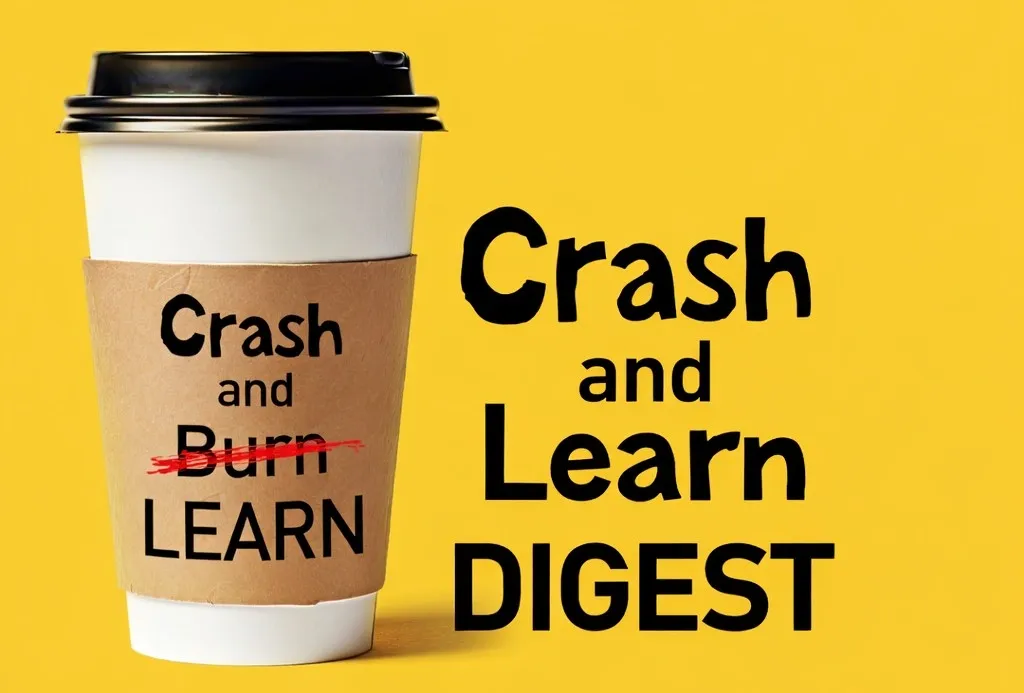
That balance became the heart of Crash and [Burn] LEARN. Story meets science. Narrative meets model. Vulnerability meets practical application.
But if you think research and outlining were the hard parts? I did too.
I was wrong.
The False Summit Effect
You might be familiar with the expression “false summit.” It’s an optical illusion that hikers and mountaineers know all too well. You think you’re about to clear the last peak. You push harder, convinced the summit is just ahead. Then you reach the top of that hill—only to discover there are more peaks waiting beyond it.
Oh boy, did I experience that in this project.
When the research was complete and the outline was ready, I thought, “Now I just have to do the writing. This should be the easy part.”
It wasn’t.
After revising the outline a couple more times, the manuscript was finally ready to share with beta readers. I’m deeply grateful to all the friends, clients, and colleagues who took time to read it and provide valuable feedback. Their insights shaped the final product in ways I couldn’t have anticipated.
As I write this blog entry, I know that once I’m done here I’ll be switching gears—back to the manuscript to refine parts of the story so they better reflect my lived experience, while also strengthening the connection between Jason Marchand’s journey and the Ten Blind Spots model I present.
More false summits ahead. And I’m okay with that now.
For Those of You With a Book Inside You
If you’ve been thinking, “I’d like to write a book about this someday”—or if you’ve already started but have stalled or feel discouraged—hear me clearly:
Don’t give up.
If you need help from an amazing writing coach, let me know. I’ll gladly introduce you to mine. Or if you’re the “go at it alone” type? Good for you. That takes courage too.
Either way, 2026 could be the year you finish your book.
You’ll learn a lot along the way—about writing, about publishing, about discipline and perseverance. But probably most of all, you’ll learn about yourself. The process has a way of surfacing things you didn’t know were there.
And who knows? Maybe you’ll sell a few copies too.
But if you’re like me, by the time you finalize the cover and send the final manuscript to the publisher, you’ll feel a sense of calm and satisfaction that transcends sales numbers. The act of completion—of transforming scattered ideas into something real and shareable—carries its own reward.
Maybe, like me, you’ll catch the bug.
Maybe you’ll already be eager to start your second book before the first one even hits the shelves.
That’s the funny thing about false summits. Once you learn to expect them, they stop feeling like setbacks.
They start feeling like progress.