
The Ratchet Effect
Why Your Stress Baseline Only Moves One Direction
I used to think stress was something you just pushed through.
You know the drill. Big deadline hits. Pressure mounts. You dig deep, power through, deliver. Then you exhale, maybe grab a drink, maybe take a weekend off. Reset complete.
Except it isn’t.
Here’s the thing about stress that nobody explained to me until I was standing in Fort Lauderdale Airport, crying in public, unable to board a plane. The stress cycle isn’t complete just because the deadline passed. Your body doesn’t care that you closed the deal or nailed the presentation or survived the board meeting.
Your body is still waiting for the signal that the threat is over.
And if that signal never comes? The stress doesn’t disappear. It accumulates.
How the Ancient Stress Cycle Actually Works
Thousands of years ago, this system worked perfectly.
Threat appeared. Your body spiked adrenaline and cortisol. Energy surged. You fought or fled. The threat ended. Hormones returned to baseline. Cycle complete.
Simple. Elegant. Effective.
But here’s where modern leadership breaks the system. Our threats don’t end cleanly. You don’t get chased by a tiger. You get chased by unresolved conversations, impossible timelines, silent board politics, and the email that lands at 11 PM that you can’t stop thinking about.
Stress rises. It peaks. And instead of resolving, it lingers.
Your body lowers the alarm a little. But not all the way. Your baseline becomes a little higher. Then the next stressor hits. Higher again. Then another. Higher still.
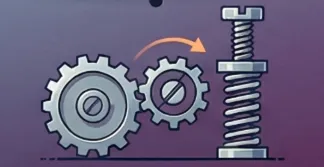
This is the Ratchet Effect.
Like a mechanical ratchet that only turns one direction, your stress baseline keeps clicking upward. It never clicks back down. Not on its own.
When Your Thermostat Gets Stuck on High
Think of it like an internal thermostat that’s been quietly adjusted one degree at a time.
Seventy-two. Seventy-four. Seventy-six.
Before you know it, you’re living at eighty-five degrees and calling it comfortable. You’ve adapted. You’ve normalized. You’ve convinced yourself this is just what high performance feels like.
I did this for years.
The 3 AM wake-ups became routine. The jaw tension became background noise. The constant hum of anxiety? That was just “being sharp.” The inability to truly rest even on vacation? That was “commitment.”
Real talk: it wasn’t any of those things. It was my nervous system running on borrowed time, clicking higher with every incomplete stress cycle, every suppressed emotion, every moment I told myself “I’ll deal with that later.”
The Debt Your Body Never Forgets
Here’s what I learned the hard way. Your body is an impeccable accountant.
Every unprocessed event adds to a tab your nervous system keeps track of in the background. The betrayal you skipped over. The job loss you never grieved. The marriage strain you stuffed under your work ethic. The shame from being blindsided in that meeting. The guilt from the layoffs you had to execute.
You might forget the details. Your body never forgets the load.
This is emotional debt. And like financial debt, it compounds over time.
The cruel irony? Executives often hit their highest roles with the highest accumulated balance. Which is why burnout at the top looks sudden from the outside but feels inevitable from the inside.
I was a sitting CEO, supposedly at the peak of my career. And the ratchet had clicked so high, for so long, that I couldn’t function anymore.
Why “Pushing Through” Makes It Worse
The strategy that got most of us here—powering through, grinding harder, refusing to slow down—is exactly what prevents the stress cycle from completing.
Every time you push through without processing, you take out a small loan from your future energy reserves. Each time you tell yourself “I’ll deal with that later,” the balance grows.
And because the world rewards this behavior—praising your stamina, admiring your composure, promoting your “resilience”—the feedback loop becomes intoxicating. Each success confirms that you can handle anything.
Until you can’t.
By the time you notice cognitive symptoms—forgetfulness, indecision, mental fog—the damage is no longer theoretical. You’ve spent years living in overdraft, and now the bill has come due.
Breaking the Ratchet
The good news? The ratchet can be released. Not by pushing harder. Not by achieving more. Not by white-knuckling through another quarter.
By actually completing the cycles you’ve been leaving open for years.
This looks different than you might expect. It’s not about taking a vacation (though rest helps). It’s about giving your nervous system the signal that the threat has passed. Movement. Breath. Connection. Processing the emotions you’ve been storing in your shoulders and jaw.
It’s about being honest with yourself when you’re not fine, instead of performing fine for everyone else.
I call it the Denial Tax—the cost of convincing yourself you can outrun biology. You can pay it gradually, through awareness and self-care. Or you can pay it all at once, when your body demands a reset.
Either way, the bill will come due.
The only question is how much interest you’ll owe when it does.
This is the work I do with executives who’ve been running on a ratcheted-up baseline for far too long. If something here resonated, I’d love to hear from you.
Ready to stop the ratchet? Schedule a conversation